
Why Billionaires Sell SBLC: Provider Benefits in Purchase Agreements
Why Billionaires & Top-Tier Institutions Lease/Sell SBLCs: Inside the Seller’s Purchase Agreement Benefits
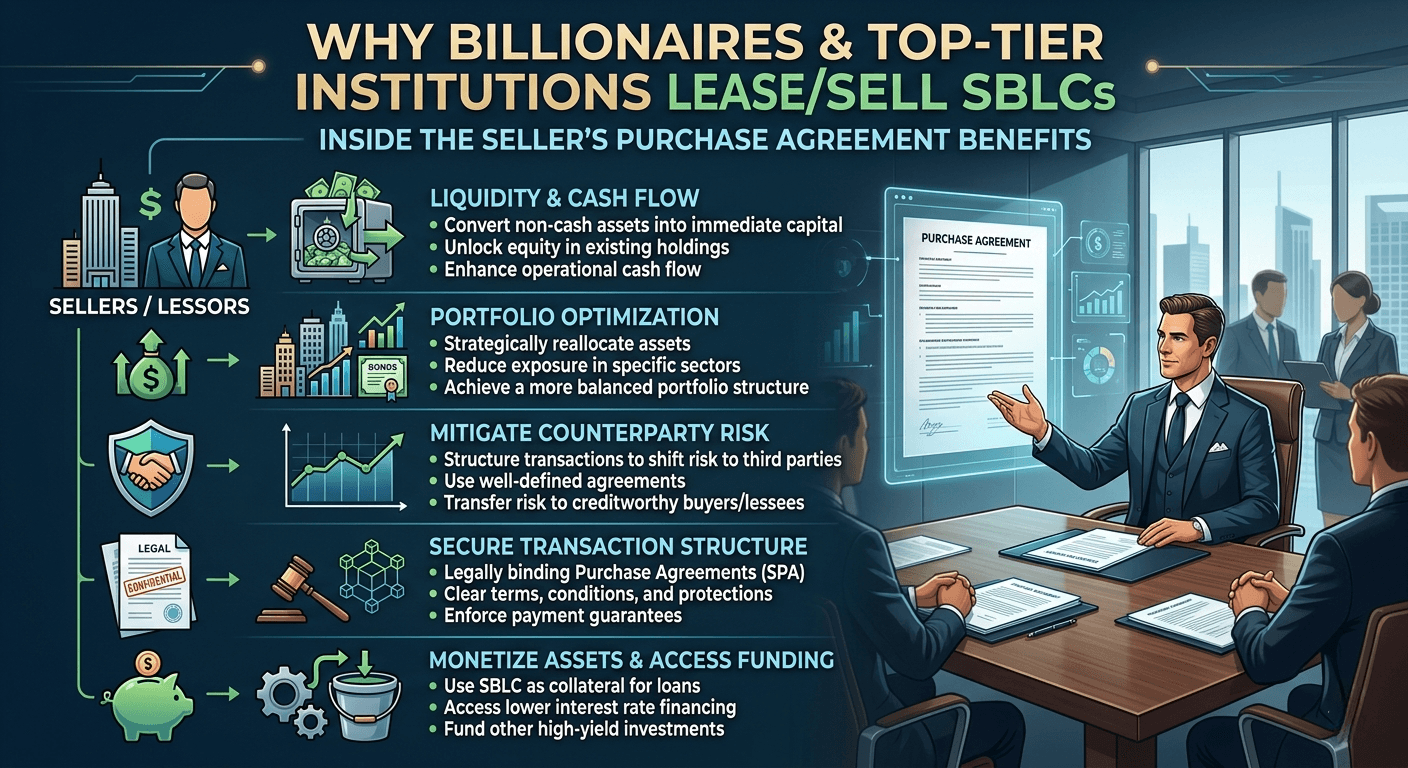
When the general public thinks of high-net-worth individuals (HNWIs) and institutional titans, they imagine investments in real estate, tech stocks, or private equity. However, in the upper echelons of global finance, billionaires and top-tier asset managers frequently engage in a highly lucrative, low-risk strategy: issuing and leasing/selling Standby Letters of Credit (SBLC).
To the uninitiated, an SBLC is simply a financial guarantee used in trade finance. But to a billionaire Provider, it is a masterclass in asset optimization.
Let’s look into the mechanics of why the world’s wealthiest entities issue these instruments and how they structure the Purchase/Leasing Agreement to lock in massive, risk-insulated returns.
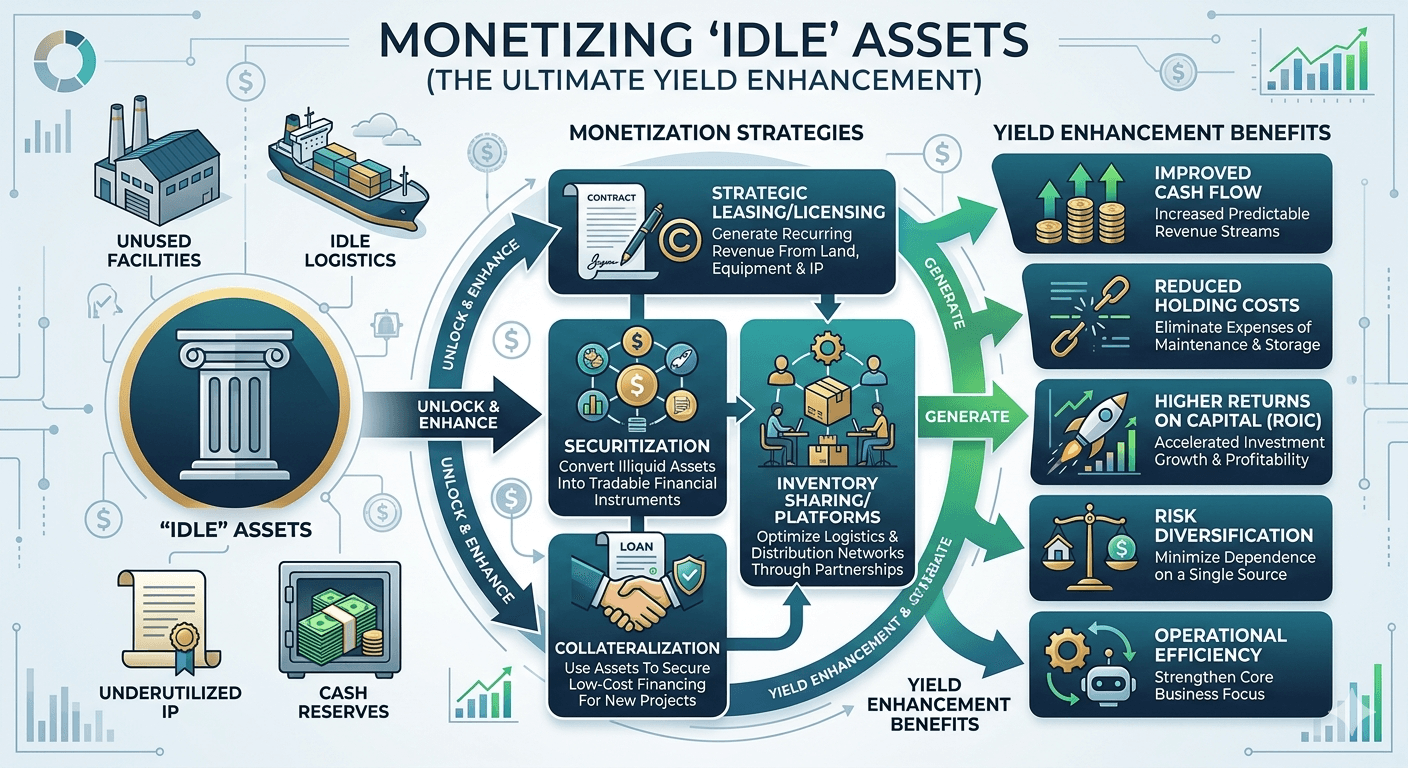
1. Monetizing “Idle” Assets (The Ultimate Yield Enhancement)
Billionaires often hold staggering amounts of wealth in low-yield, highly secure environments—such as government bonds, gold, or institutional cash reserves. Keeping these assets static ensures preservation, but it limits growth.
By issuing an SBLC backed by these static assets, the Provider can monetize their balance sheet without liquidating their underlying portfolio.
The Strategy: The billionaire’s assets stay securely in their account, continuing to compound or earn interest.
The SBLC Twist: They use those same assets as collateral to issue an SBLC to a third-party Buyer (or Lessee) in exchange for an upfront fee (typically 4% to 10% of the face value annually).
In short: They get paid a massive premium just for letting their financial reputation and idle assets stand as a safety net for someone else.
2. Asymmetric Risk: The Power of the Purchase Agreement
The primary reason billionaires love SBLC transactions is that a properly structured Purchase Agreement (or Deed of Agreement) shifts virtually all operational risk away from the Seller.
In a standard SBLC transaction, the Seller is not funding a loan; they are providing a standby guarantee that is only triggered if the Buyer defaults on a specific contract. To mitigate this risk completely, the Seller’s legal team structures the Purchase Agreement with watertight safeguards:
Strategic Safeguards in the Agreement
Strict Default Proofs: The agreement dictates that the SBLC cannot be randomly drawn down. The beneficiary must present rigorous, undeniable documentary proof of default, verified by top-tier (Euroclear/SWIFT) banking compliance.
Non-Transferable & Non-Assignable Clauses: The Seller ensures the SBLC is structured so it cannot be altered or reassigned without their explicit written consent, keeping total control in the hands of the issuer.
Upfront Compensation: The fee paid by the Buyer to the Seller is non-refundable and paid before the SWIFT MT760 (the actual transmission of the SBLC) is finalized. The Seller enters the transaction already profitable.
3. High Velocity of Capital & Compounding Fees
Unlike traditional real estate developments or venture capital investments that take 5 to 10 years to mature, SBLC transactions operate on a high-velocity timeline.
Most SBLCs are issued for one year and one day. This allows the billionaire Provider to turn over their credit capacity rapidly. Look at how the numbers compound across multiple tranches:
| Transaction Phase | Seller’s Action | Financial Impact |
| Step 1: Agreement | Signs Purchase Agreement with vetted Buyer. | Secures non-refundable upfront commitment fees. |
| Step 2: Issuance | Instructs Issuing Bank to transmit MT760. | Receives full lease/purchase fee (e.g., 6% on a $100M instrument = $6,000,000). |
| Step 3: Expiry | Instrument expires in 366 days without default. | Collateral is fully unlocked; Seller retains the $6M and repeats the process. |